SaaS is the new mall
Growing up in the 90s, the mall was the center of the universe. It wasn't just where you bought sneakers; it was where you hung out, went to the movies, and felt the pulse of the world. Then, almost overnight, the "Retail Apocalypse" happened. Amazon didn't just offer more books; it offered a fundamentally different way to consume.
Lately, I've been getting that same eerie feeling about the software industry. If you look closely, the parallels are everywhere.
SaaS is becoming the new mall. And AI is our Amazon.
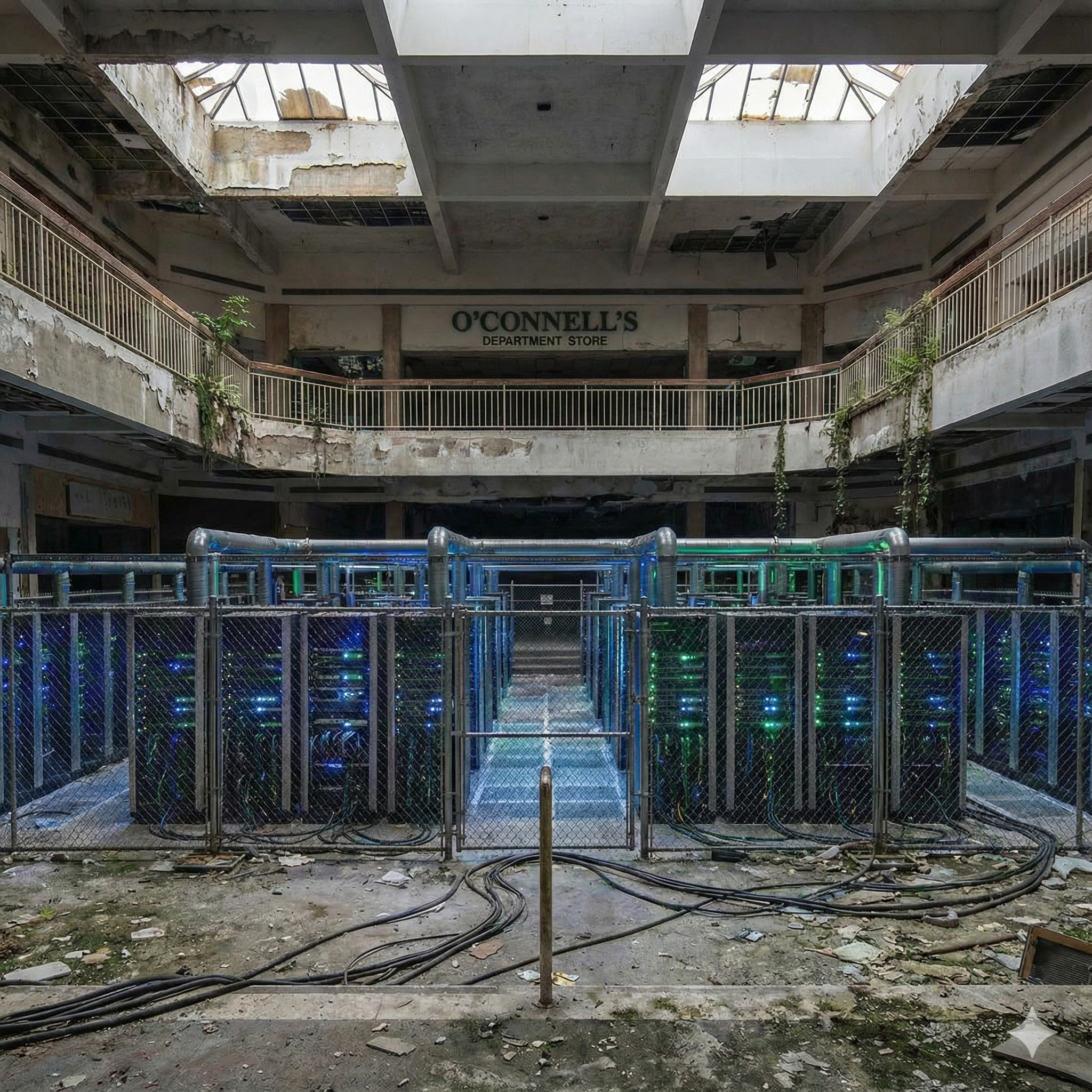
The Rise and Fall of the Great Indoors
For decades, malls thrived on a simple premise: aggregation. You put everything under one roof, charge a premium for the convenience, and benefit from the foot traffic. But then came e-commerce. It removed the friction of physical travel, slashed the margins by cutting out the middleman, and offered a selection no physical building could match.
The mall didn't stand a chance because it couldn't compete on the three things that actually matter to a modern consumer: price, speed, and convenience.
Today, SaaS is facing its own "Amazon moment" with AI.
Why SaaS is being disrupted?
Think about your typical enterprise SaaS tool. It's bloated, expensive, and slow to evolve. You're paying for a massive suite of features, 80% of which you never touch. When you want a new feature, you have to wait for a roadmap that spans quarters, not days.
AI is disrupting this the same way e-commerce disrupted retail:
- Higher Margins: AI-native tools don't need massive sales teams or bloated support orgs. They are leaner and meaner.
- Instant Response: Why wait for a software update when you can use an LLM to generate the exact logic or UI you need instantly?
- Infinite Customization: SaaS is "one size fits many." AI is "exactly what you need, right now."
No user is going to keep paying $50/month for a clunky project management tool when an AI agent can build them a custom dashboard in thirty seconds for the cost of a few tokens.
How Malls Survived (Or Didn't)
So, how did the malls that survived stay alive? They did one of two things:
- They doubled down on uniqueness. They became "third places" with high-end restaurants, theme parks, and experiences you physically cannot get online.
- Repurpose entirely. Dead malls across America are becoming Amazon fulfillment centers. The very company that killed them is now using their carcasses. Former anchor stores are being converted into distribution hubs, self-storage facilities, and mixed-use developments.
The malls that tried to keep being malls (just cheaper, or with slightly better parking) failed. Half-measures don't work when the disruption is structural.
What SaaS Must Do
SaaS companies have two paths forward.
Path 1: Double down on what AI can't do.
Some things remain genuinely hard even in the age of AI:
- Large-scale infrastructure. Running data warehouses at scale, managing distributed systems, handling billions of transactions. The complexity here isn't in the code- it's in the operations. Snowflake isn't threatened by ChatGPT.
- Data moats. If your product's value comes from proprietary data that AI can't access or replicate, you have a defensible position. Network effects and accumulated data still matter.
- Regulatory compliance. Healthcare, finance, government—industries where the burden of proof and audit trails create real barriers. AI can assist here, but enterprises still need certified, compliant platforms.
- Physical-world integration. IoT, hardware control systems, manufacturing automation. The digital-physical boundary remains a moat.
Path 2: Repurpose to serve AI.
Just as dead malls became warehouses for the e-commerce companies that killed them, SaaS can pivot to serve the AI ecosystem:
- Agent infrastructure. AI agents need places to store state, manage credentials, and coordinate actions. The next generation of SaaS might be picks-and-shovels for AI workers.
- AI orchestration platforms. As companies deploy dozens of AI agents, they'll need tools to manage, monitor, and optimize them. This is where traditional DevOps expertise becomes valuable.
- Human-AI collaboration layers. The most valuable work will happen at the intersection. SaaS can become the interface between human intent and AI execution.
The Timeline Is Faster Than You Think
Malls had decades to decline. SaaS won't get that luxury.
E-commerce grew from 4% of retail sales in 2010 to over 20% today. It took 15 years. AI adoption is moving faster. Much faster. The same dynamics are compressed into years, not decades.
If you're running a SaaS company, the question isn't whether AI will disrupt your market. It's whether you'll be Amazon - using the disruption to grow - or Sears, wondering what happened. If you're building new software, ask yourself: am I building a mall in 2024?